The Off-Season
In February the beach towns empty out. What is left is the shape of the place.
The summer crowds leave in a rush after Labor Day, and by the first cold weeks of the new year the beach towns on the Delmarva coast are nearly empty. The shutters come down on the snack stands. The rental signs come out. The parking meters stop mattering, and the traffic lights on the coastal highway change for nobody.
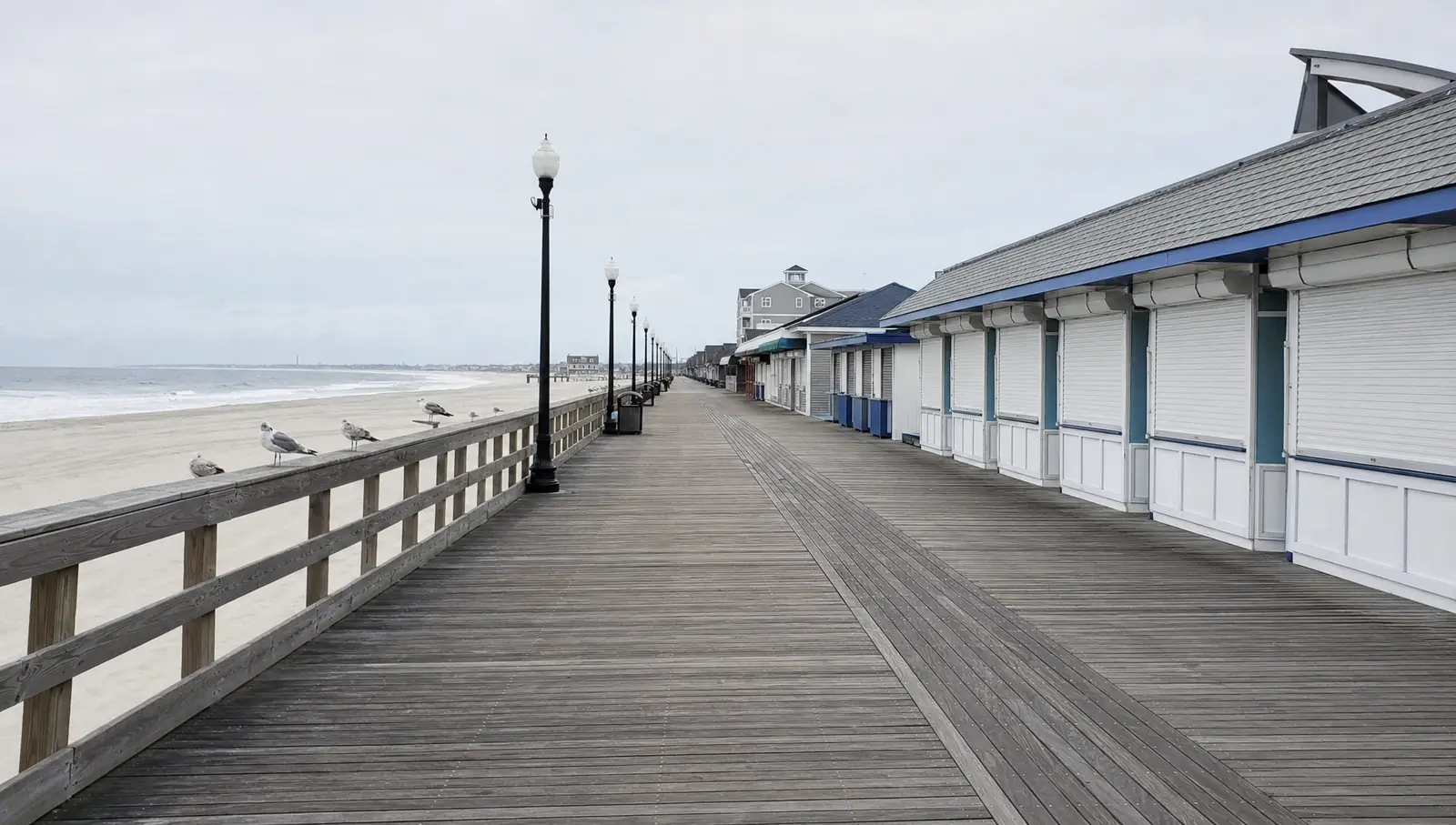
The people who stay are the ones who live there, and the towns turn back into small towns. One diner stays open on the main street and fills up with contractors at seven in the morning. The hardware store is busy. A few surfers in thick wetsuits sit out past the break on the colder days, and the gulls stand on the boardwalk railing as if they own it.
Prices fall, and so do the crowds at the grocery store. Some families from inland come down for a weekend just to have the beach to themselves, wrapped in coats, walking the dog along the tide line where dogs are not allowed in summer. The motels that stay open are cheap and quiet. The restaurants that close put handwritten notes in the windows thanking their customers and promising to be back in spring.
Walking the boardwalk in winter shows things the summer hides. The boards themselves, grey and worn and patched. The way the dunes have moved since last year. The houses on stilts, the storm fencing, and the wide pale beach running north and south with no umbrellas on it. The ocean is louder without the crowd.
A quieter road
The drive down is different too. Route 50 and Route 1 run empty enough to feel strange after July. That brings its own risks. The ice on a bridge deck over the bay or the marsh, the fog that rolls in off the water without warning, and the deer on the back roads at dusk. Winter driving here is rarely dramatic. It mostly asks for attention on roads that feel easy.
Check the forecast for wind as well as snow. A strong northeaster can push water over the low roads near the bays and close the routes in and out of town for a tide or two, and the people who live there plan their errands around it.
Then, sometime in March, the first stands open, the paint goes on and the town starts to fill again.