Behind the Screen Door
A crab house on the Eastern Shore is usually a plain room with brown paper on the tables. What happens there on a summer evening is about as close as the peninsula gets to a shared ritual.
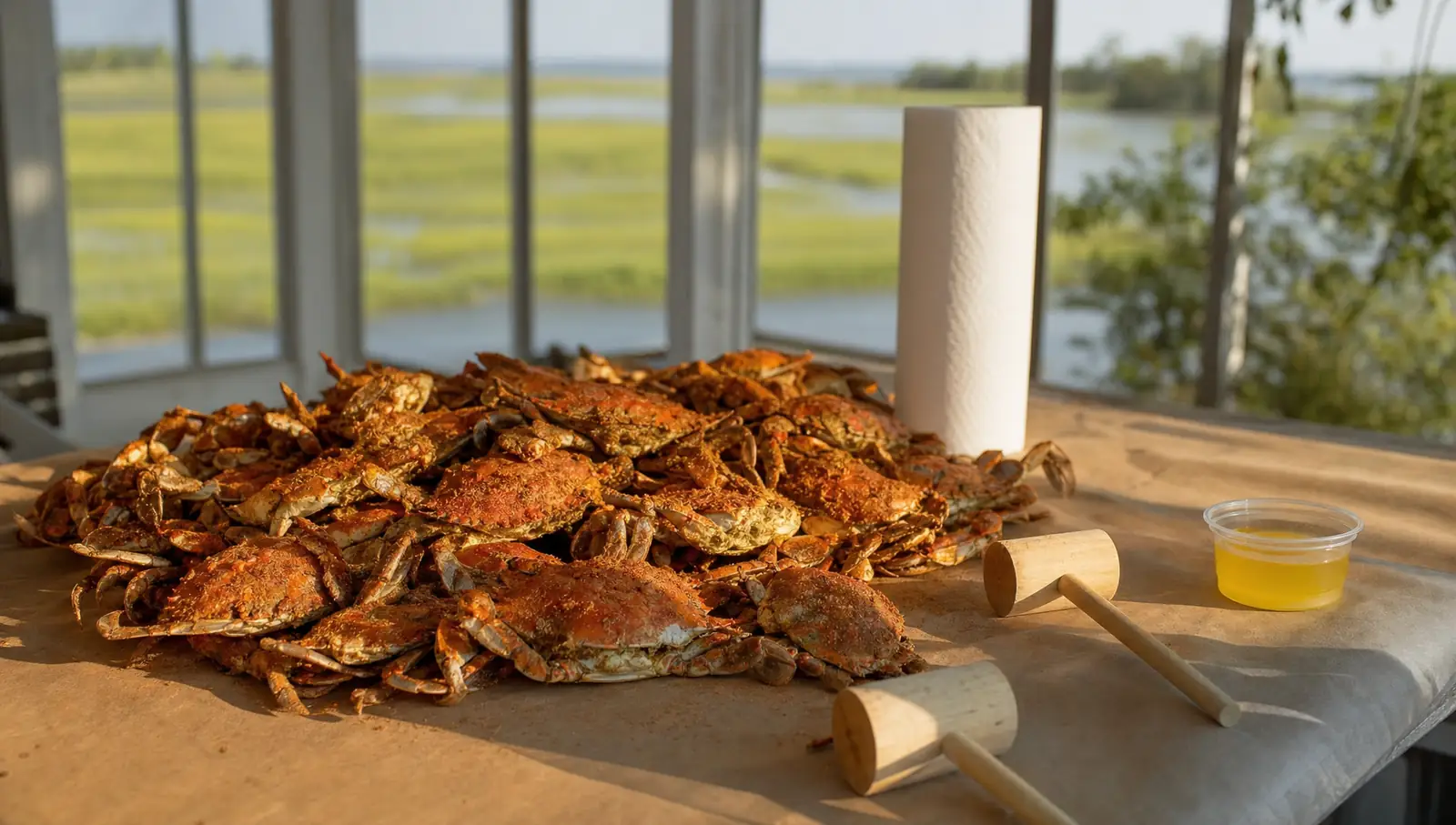
The screen door is the first thing. It slaps shut behind you on its spring, and the room on the other side smells of steam, vinegar and spice. There are long tables, folding chairs, rolls of paper towels standing on end and a stack of wooden mallets by the register. Nobody dresses up. A good crab house on the Delmarva Peninsula looks almost exactly like a bad one, and the only way to tell the difference is to sit down.
The room
Most of these places sit near the water, on a creek or a harbor road, often a few miles from the nearest town. Some open only from spring into the fall. The walls carry tide charts, faded photographs of workboats and a hand-lettered price board that changes with the week's catch. On a warm evening the porch fills first, because the breeze off the marsh keeps the steam bearable.
The tables are covered in brown paper for a practical reason. Steamed crabs are a mess. Shells, claws and seasoning end up everywhere, and at the end of the meal the server simply rolls the paper up with everything inside it and lays down a fresh sheet.
Ordering by the dozen
Crabs are sold by the dozen or by the bushel, and the price follows size. Mediums, larges and jumbos are measured across the shell, point to point. The board may also say whether the crabs are males or females. Males, called jimmies, tend to be the meatier choice for eating. A crab described as heavy is full of meat, which usually happens later in the season.
A first-timer might ask how many to order. Half a dozen large crabs is plenty for most people alongside corn and hush puppies, and the server will say so if a table is about to order far too many. They come to the table hot, in a heap, dusted red with the house seasoning.
Picking a crab
There is no single right way, and every family has its own. The general shape of it goes like this:
- Twist off the claws and the legs and set them aside.
- Turn the crab over and pry up the narrow tab on the belly, called the apron.
- Lift the top shell off from the back.
- Scrape away the soft gills, which are not eaten, and rinse off the yellow material if you prefer.
- Break the body in half and pull the white meat out of each chamber with your fingers or a small knife.
- Crack the claws gently with the mallet, just enough to break the shell without crushing the meat.
The first crab is slow. By the fourth, most people have found a rhythm, and the conversation at the table has slowed down to match it.
The season and the water
Everything in that room depends on the bay. The blue crab is the most valuable fishery in the Chesapeake, according to NOAA Fisheries, and it is Maryland's state crustacean. A blue crab lives only three or four years. Its numbers rise and fall with water temperature, winter cold, grass beds and the pressure of the catch, so the states around the bay assess the population each year and set limits to match.
That is why the price board changes and why some summers feel lean. A bad winter or a poor spawn shows up on the tables a season or two later. The watermen who set the pots feel it first, then the crab houses, then everyone sitting at those long paper-covered tables.
It is worth remembering when the bill comes. A dozen jumbos costs what it costs because someone went out before dawn, worked a line of pots in the heat, and brought the boat back in before the afternoon storms. The ritual at the table starts with that work on the water, and it only lasts as long as the bay can carry it.