Two Lanes at Dusk
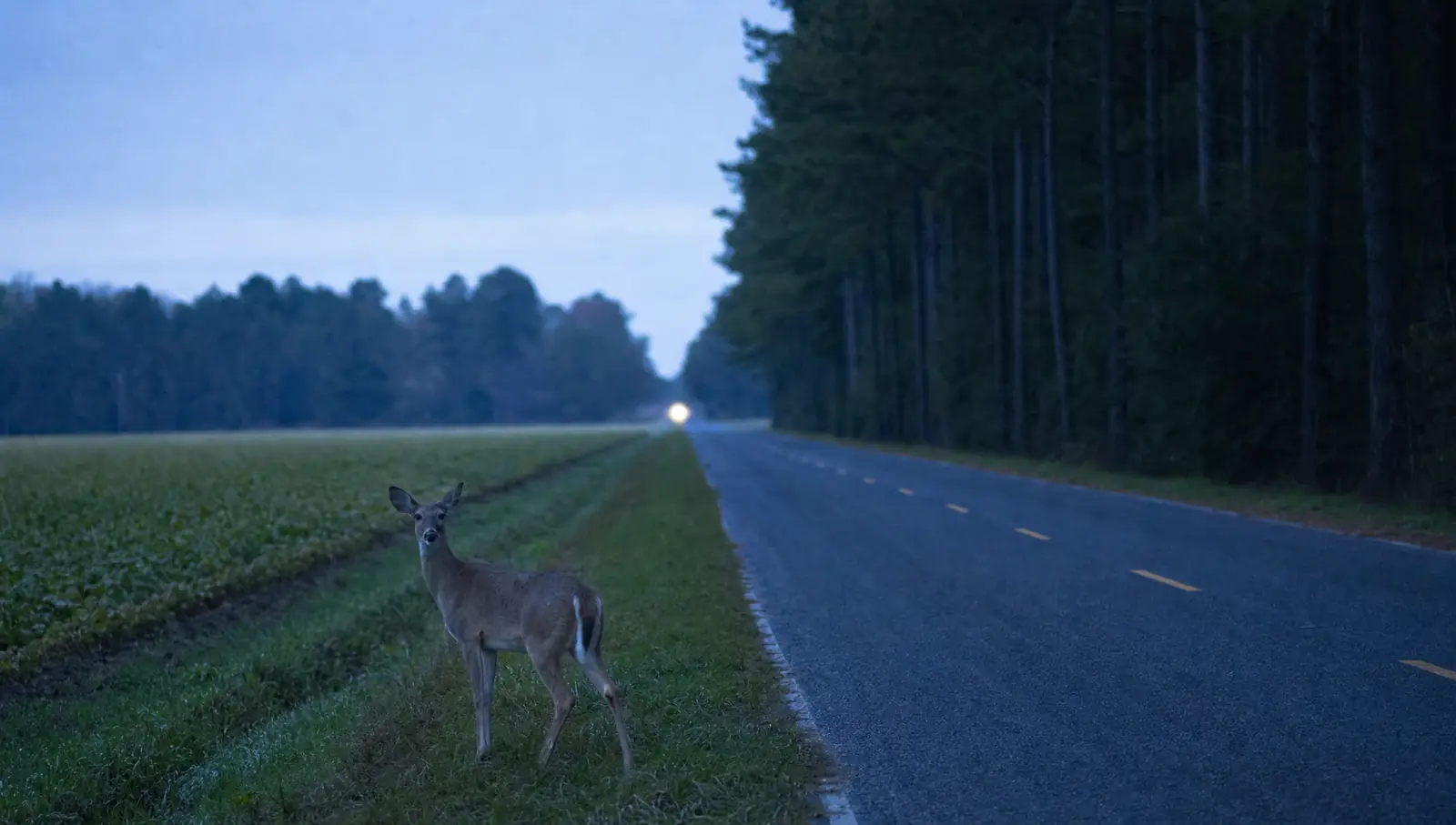
The back roads of the lower Shore run between ditches and fields with no shoulder at all. In the hour after sunset they belong to the deer.
Leave the highway almost anywhere on the lower Delmarva Peninsula and the roads shrink fast. Two lanes, a faded center line, a ditch on either side and a field beyond it. Many of these roads were laid out along old farm boundaries, so they run dead straight for a mile and then turn sharply at a property corner, with a single tree or a mailbox as the only warning.
In daylight they are a pleasure. The traffic is light, the fields are wide and the light changes over the marsh all afternoon. The trouble starts in the half hour after the sun goes down.
Why dusk is different
White-tailed deer are most active at dawn and dusk, and the peninsula has a great many of them. They bed down in the woodlots and tree lines during the day and cross the roads to feed in the open fields as the light goes. In the fall, during the breeding season, they move even more, and they move without much caution. October through December is the stretch when collisions climb.
Dusk is also when human eyes are at their worst. The sky can still look bright while the road surface and the ditch edges have gone grey and flat. Headlights do little until it is properly dark, and a brown animal standing against brown grass is very hard to see until it moves.
A deer at the edge of the road is rarely alone. Where one crosses, others tend to follow a few seconds behind, often the younger ones. A driver who brakes for the first deer and then speeds up again is the one most likely to meet the second.
No shoulder, no room
The roads themselves leave little margin. There is usually no paved shoulder at all, only a strip of grass that drops quickly into a drainage ditch. Those ditches are deep, steep-sided and often full of water. Swerving off the road to miss an animal can turn a dented bumper into a car on its side in the water.
The standard advice from insurers and state road agencies is plain. Brake firmly, hold the wheel straight and stay in your lane. Hitting a deer is bad. Leaving the road at speed beside a ditch is usually worse. It feels wrong in the moment, which is why it helps to have decided ahead of time.
Habits that help
Slowing down by ten miles an hour after sunset costs a minute or two on most back-road trips and buys a great deal of stopping distance. Use high beams whenever no one is coming the other way, and watch the edges of the light rather than the middle of it, since that is where eyes catch first. Pay attention near woodlots, creek crossings and the gaps between fields, which are the deer's usual paths.
Watch, too, for the other things these roads carry at the end of the day: a cyclist without lights heading home from a shift, a farm truck pulling out of a field lane, a neighbor walking a dog along the grass. The light that hides a deer hides them too, and they have even less protection.
The drive home on a summer evening, with the windows down and the frogs loud in the ditches, is one of the best things about living here. It is worth taking a little slower.